Why Storytelling Still Wins in Branding and Marketing
Quick answer: people make emotional decisions before logical ones, which is why facts alone rarely change minds but a good story almost always does. That's why brand strategy, not another content calendar, is what makes a brand memorable and worth choosing over a competitor selling the same thing. George Design builds every brand around a real story first.
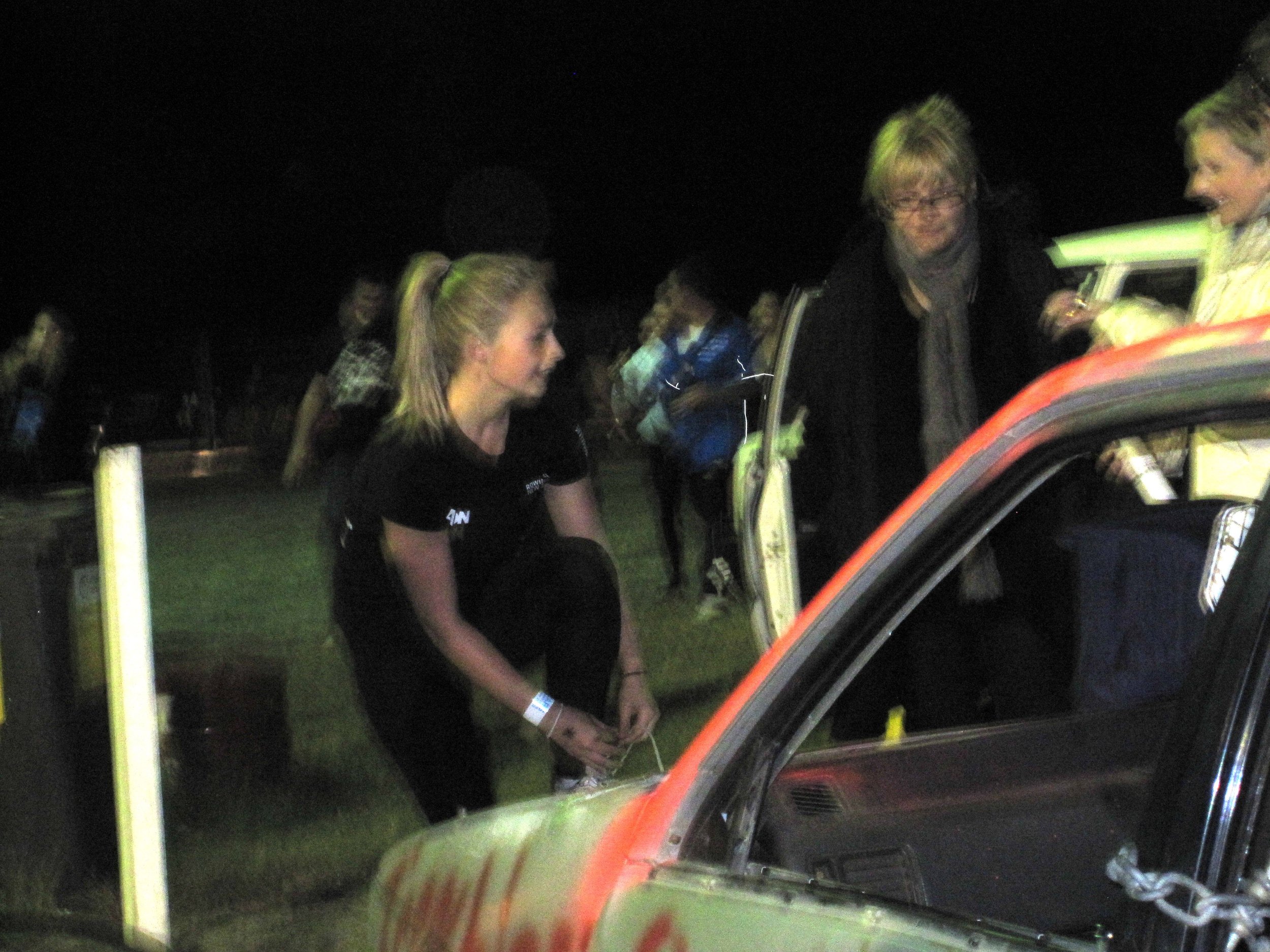
The first time I raced in a demolition derby at Woodford Glen, one bloke laughed when I pulled into the pits.
Not subtle laughed either. Full “this should be good” energy.


To be fair, I understood his concern.
I was a girl in a race suit ft. hot pink helmet standing beside a group of men who looked like they’d been born holding spanners and drinking Cody’s. The odds weren’t exactly screaming future motorsport icon.
One of them asked if I seriously knew how to drive the thing.
Which, honestly, made me want to win even more.
By the time the race started, people weren’t watching because of the car anymore. They were watching because of the story.
The underdog. The girl racer. The doubt hanging around the pits before the lights went green.
The possibility that somebody everybody underestimated might suddenly prove them wrong.
That emotional layer changed everything.
People weren’t simply observing a race at that point. They were emotionally involved in an outcome. They wanted to see what happened next. That’s what good storytelling does.

Why does storytelling work so powerfully in marketing?
It creates emotional investment before logic has even fully entered the conversation, which is exactly why storytelling remains one of the most powerful tools in branding and marketing — and why so much modern marketing completely misses the point.
That's exactly why our brand strategists start every project with the story and the positioning, long before any visuals get made.
Businesses are out here posting: “NOW AVAILABLE IN SAGE GREEN.”
Meanwhile most customers are walking around making emotional decisions first and logical decisions second.
Nobody remembers information the same way they remember stories.
You probably cannot recall the fifth thing you scrolled past on Instagram this morning, but you absolutely remember embarrassing moments from high school, movies that made you cry unexpectedly, or the exact way somebody made you feel during a difficult time in your life.
Stories stick because humans see themselves inside them.
Why do customers connect with brands emotionally?
A skincare brand saying: “Our serum contains active peptides and hyaluronic acid” might register logically.
But:
“Ever looked in the mirror after three bad sleeps and thought you resembled an exhausted mum surviving solely on oat milk and financial stress?”
That lands differently.
One gives information. The other creates recognition.
And recognition builds connection far faster than information ever will.
This is also why people buy from brands they feel emotionally attached to. Customers want to see themselves somewhere inside the story you’re telling. They want aspiration. Brand identity. Relief. Confidence. Hope. A future version of themselves that feels slightly better than the one they currently are.
A builder is not simply selling construction. They are selling slower mornings, family dinners in a beautiful kitchen, and the feeling of finally walking into a home that feels calm instead of chaotic.
A funeral home is not selling logistics. They are selling reassurance during one of the hardest weeks of somebody’s life.
An office chair company is not selling lumbar support. They are selling the possibility of surviving forty years of desk work without lowering yourself onto the couch like an injured pensioner at the end of every day.
What makes storytelling so effective for branding?
Storytelling translates products into human meaning. Businesses that understand this usually create dramatically stronger brands because they stop communicating like businesses and start communicating like humans with emotional intelligence, perspective, and self-awareness. Which sounds obvious when written down, although the internet continues to struggle with it daily.
That's the same thinking behind every rebrand our creative design agency takes on: story before visuals, always. You can see it across the brands we've helped tell a stronger story.
The strongest brands rarely make people feel neutral.
They create familiarity. Aspiration. Trust. Curiosity. Sometimes envy. Sometimes comfort. Sometimes excitement. But almost never neutrality.
That’s why storytelling matters.
The moment somebody emotionally sees themselves inside your story, your brand stops feeling like another business asking for attention.
It starts feeling relevant.
And relevance has always been incredibly profitable.
If your brand still reads like a spec sheet instead of a story, let's build yours around brand strategy or start your project with George Design.
Why does storytelling work better than facts in marketing?
Because people make emotional decisions before logical ones. A story lets someone see themselves in it, which builds recognition and trust far faster than a list of features or specifications on their own.